The Digital Toolbox: How Online Reputation Management Helps Construction Professionals Stand Out
September 5, 2023
Navigating Reputation Risks: A Guide to Crisis Communication in the Construction Industry
September 5, 2023
Over the past few years, the architecture landscape has been evolving at an admirable speed. Immersive technology including virtual reality (VR) and augmented reality (AR) are swiftly transforming the way architectural firms communicate their designs. They are creating a seamless blend of the real and virtual world for a dynamic, intuitive, and highly interactive experience. In this article, we will delve into the transformative influence of VR and AR on UK architecture marketing, emphasising its significance and applicability.
Before we delve into this topic, do permit me a few moments to enlighten you. Virtual reality, by definition, is a computer-generated simulation of a three-dimensional image or environment that can be interacted with in a seemingly real or physical way by a person using special electronic equipment. Augmented Reality, on the other hand, is an interactive experience of a real-world environment where objects residing in the real world are enhanced by computer-generated perceptual information.
Imagine, if you will, the ability to walk potential clients through a richly layered, immersive 3D model of a proposed building, with the capability of modifying the design elements instantly. This is the power that VR imparts to architects. It enables them to illustrate their visions like never before, giving clients a near-lifelike simulation of the final product. Moreover, through AR, architects can overlay digital enhancements onto real-world views, bringing their designs to life in captivating new ways.
So why, you may ask, are these technologies pivotal for UK architecture marketing?
Firstly, VR and AR provide an unparalleled level of interactivity and engagement. It is a well-known fact that humans are visual creatures. A 3D walkthrough will always be more appealing and impactful than a stack of 2D blueprints or abstract renderings. It provides a sense of spatial awareness and depth that other forms of visualisation fail to achieve.
Secondly, the virtual and augmented realities help to manage client expectations more effectively. They reduce the scope for misinterpretation and misunderstanding that could otherwise arise from conventional forms of presentations. Through these technologies, architects can effectively demonstrate design concepts, adjustments, and the final outlook in an engaging, precise, and comprehensible way.
Thirdly, and possibly most crucially, immersive technologies elevate marketing strategies by distinguishing your firm in a competitive market sector. These tools are still in the experimental phase for various architecture firms, which means there’s an opportunity to lead the trend, captivating your prospective clientele with revolutionary design presentations.
It’s 2022, and these technologies are no longer relegated as ‘futuristic’ – they’re here and affirming their presence across sectors, including architecture. Utilising VR and AR in your architectural endeavours will not merely be an added advantage but a prerequisite in the imminent future.
In essence, the extent of the potential that VR and AR hold for the architecture industry, especially for firms based in the UK, is vast and profound. It’s high time that firms recognise and capitalise on this veritable revolution to cultivate a seamless blend of reality and virtuality in their business models. The journey might entail a few bumps along the road, but the destination, undoubtedly, will be a derivation of growth, innovation, and success.
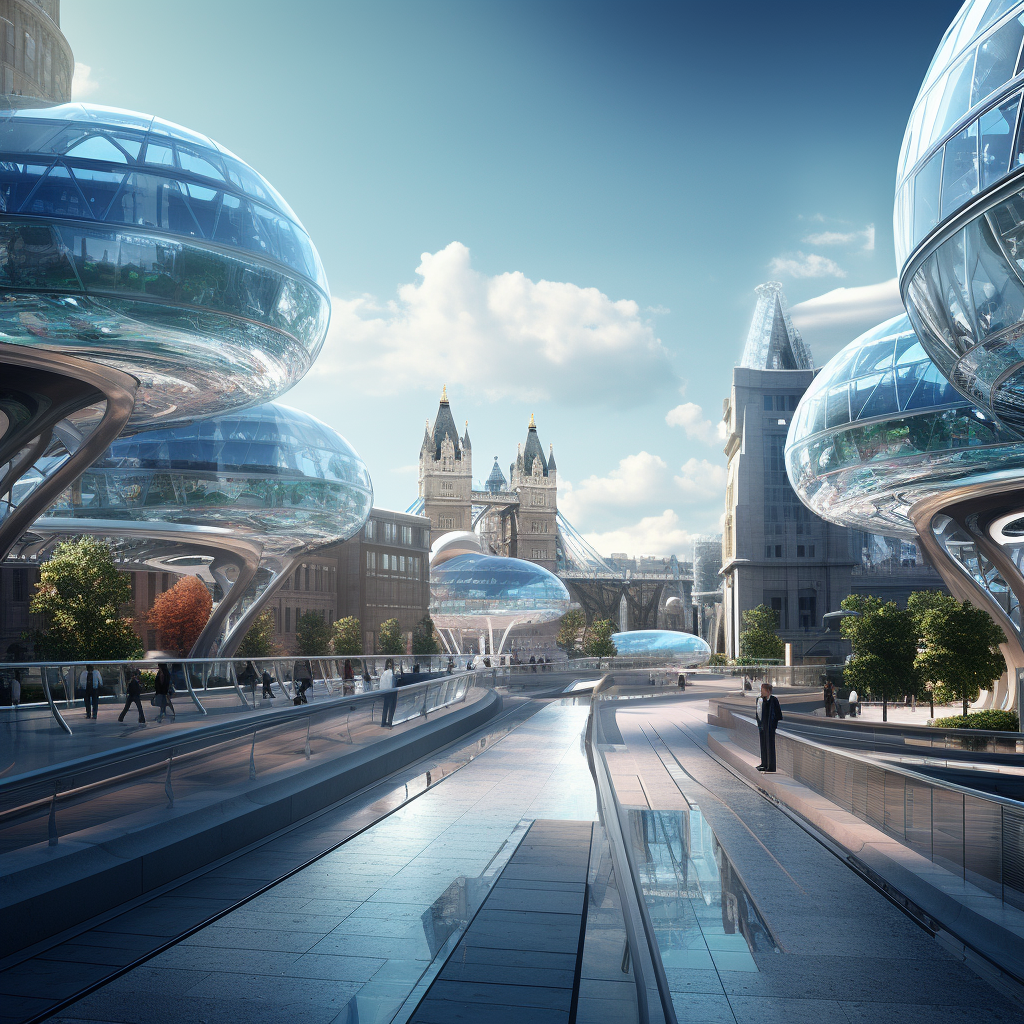
Case Study: The Transformation of Architecture Marketing through XR at Foster + Partners, UK
Internationally acclaimed architectural firm Foster + Partners, UK offers a fascinating, practical illustration of the transformative influence of VR and AR in architecture marketing.
In 2017, Foster + Partners launched a pioneering XR (Extended Reality) design toolkit that incorporated both VR and AR technologies. XR was conceived as a new design tool that allows architects to step into their designs, experiencing their own creations from a first-person perspective in a fully immersive, three-dimensional space.
Here’s how Foster + Partners put this groundbreaking technology to work in marketing their designs.
- Immersive Client Presentations: The firm used XR technology to create highly interactive, three-dimensional simulations of their architectural designs. This allowed their clients to experience, rather than just view, their proposed designs. It helped the clients to feel the scale, proportion, and context of the project, making them feel a part of the design process. It also minimized miscommunication and misunderstanding, as the clients could see and interact with the proposed designs in an intuitive way.
- Real-time Design Collaboration and Modification: The toolkit enabled architects and clients to make changes to the proposed design in real-time, allowing an immediate visualisation of the modifications. It allowed clients to see and understand how adjustments would impact the final building, meaning revisions became more efficient, less costly, and extremely interactive.
Implementing the XR Design Toolkit
If you’re considering implementing similar technologies in your firm, here are some practical steps to start leveraging immersive tech:
- Investing in the Right Equipment: Start by purchasing high-resolution headsets and controllers suitable for VR application in architecture, such as the HTC Vive Pro, Oculus Rift or Microsoft’s HoloLens for AR.
- Investing in Software and Training: Purchase or develop software to generate 3D models that can be viewed and interacted with in VR. You may need to hire consultants or train existing staff to use these new tools effectively.
- Integrate into Your Workflow: Use VR initially to supplement your current design presentations, rather than replacing them entirely, allowing client and user success to drive adoption rates.
- Marketing Innovator: In your marketing communications, highlight your use of this cutting-edge technology to differentiate yourself from competitors and attract clients looking for an innovative architectural firm.
Foster + Partners’ adoption of the XR design toolkit has revolutionized their marketing, client pitch and collaboration process. This offers a compelling glimpse of the transformative potential that VR and AR hold for UK architecture marketing, signaling a new era where interactive, immersive technologies become standard tools in an architect’s kit.
Are you ready to revolutionise your architectural firm and catapult into the future of design representation? Bring your architectural projects to life with immersive technology like never before. Allow us to show you how VR and AR can change the game for your firm, setting you apart from the competition and delighting your clients with detailed, interactive, and personalised designs.
Embrace this opportunity to integrate digital enhancements into your marketing strategy. Don’t just stay in pace with change, lead it. Showcase your designs from every angle and update them in real-time, giving your clients an unrivalled design experience. Validate your ideas and demonstrate your innovation by adopting VR and AR in your architectural endeavours.
Hesitating won’t get your firm ahead, but taking action will. If you’re ready to master these transformative technologies and advance your business in ways you could only have dreamt before, get in touch with us today. Allow us to help your firm ride the wave of this simulation revolution and reach unimagined heights of success. It’s not just about presenting designs anymore; it’s about offering an immersive virtual journey to your clients.
Don’t wait for the future to arrive, create it now with VR and AR. Contact us today. Let’s transform UK architecture together.

Experience the future of architectural design today with our immersive VR and AR technologies – start your journey with us now!